
In the world of interior design, specifying fabrics for a residential living room and a high-traffic hotel lobby are two completely different disciplines. A velvet that looks stunning in a private home may crush, fade, or fail safety inspections within months if placed in a commercial environment.
For hoteliers, interior architects, and FF&E procurement teams, understanding commercial textile specifications is critical. This guide breaks down the essential performance metrics—from Martindale abrasion testing to inherent fire retardancy—required to successfully specify textiles for the hospitality and trade sectors.
Quick Takeaways: Commercial Specifications
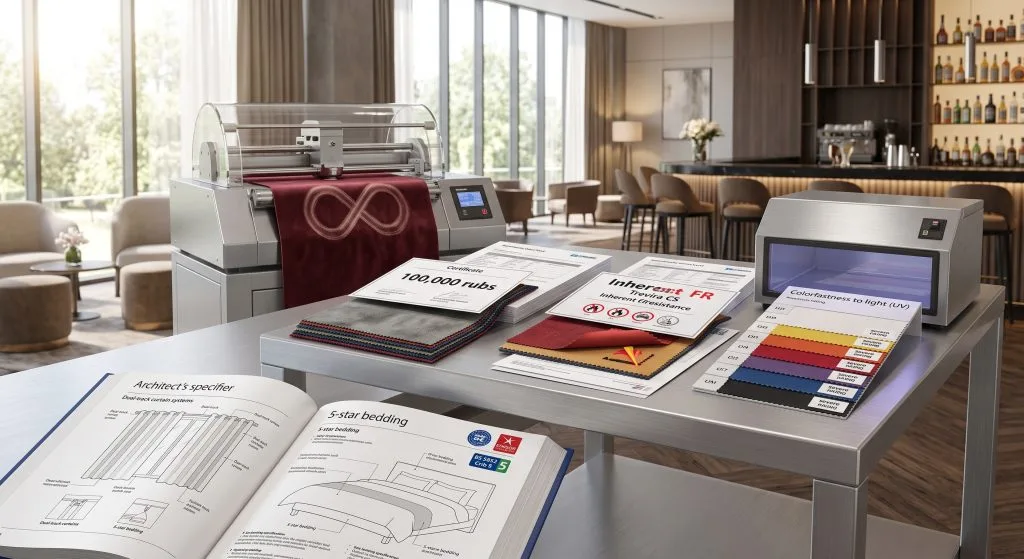
- Durability (Martindale Test): Commercial upholstery requires a minimum of 40,000 rubs; high-traffic public spaces require 100,000+ rubs.
- Fire Retardancy (FR): Hospitality fabrics must meet strict local civil defense codes (e.g., BS 5852 or NFPA 701). Specify Inherent FR fabrics for permanent, wash-proof protection.
- Colorfastness to Light: Crucial for UAE and Middle East projects. Sun-exposed hotel lobbies require fabrics with a high UV resistance rating to prevent rapid fading.
- Maintenance: Commercial textiles must withstand industrial laundering protocols, high temperatures, and harsh cleaning agents without shrinking or degrading.
1. Abrasion Resistance: The Martindale Rub Test
The most important metric for commercial upholstery is its resistance to abrasion. In Europe and the Middle East, this is measured using the Martindale Rub Test. The test uses a machine to rub a piece of worsted wool against the test fabric in a figure-eight motion until the fabric shows visible signs of wear or two yarn breaks occur.
When specifying fabrics for a project, match the Martindale count to the expected foot traffic of the environment:
| Martindale Rub Count | Grading Classification | Appropriate Application |
|---|---|---|
| 10,000 – 15,000 | Decorative / Light Domestic | Cushions, decorative accents, and residential bedroom chairs. (Not suitable for commercial use). |
| 15,000 – 25,000 | General Domestic | Everyday residential living room furniture. |
| 25,000 – 30,000 | Heavy Duty Domestic | Active family homes and light-use hotel guest room chairs. |
| 40,000 – 50,000 | General Commercial | Standard hotel rooms, corporate office seating, and private dining rooms. |
| 100,000+ | Severe Commercial (Contract) | Hotel lobbies, high-turnover restaurants, airports, and public transit seating. |
Specification Note: Wyzenbeek vs. Martindale
While the Middle East and Europe use the Martindale test, North American projects typically use the Wyzenbeek Test (measured in “Double Rubs”). The tests use different mechanical motions, meaning their results cannot be directly converted. Always ensure your supplier provides the correct certification for your region.
2. Fire Retardancy (FR): Inherent vs. Treated
In the hospitality sector, fire safety is a non-negotiable legal requirement. Commercial curtains, upholstery, and bedding must adhere to stringent regional fire codes. In the UAE, materials must typically comply with international standards such as the UK’s BS 5852 (Crib 5) for upholstery or the US’s NFPA 701 for drapery.
When selecting FR fabrics, designers must choose between two types of protection:
- Treated FR Fabrics: Standard fabrics (like natural cotton or linen) that have been chemically coated to resist ignition. This treatment is highly effective but can degrade over time after repeated industrial washing or dry cleaning. It must eventually be reapplied.
- Inherent FR Fabrics (IFR): Fabrics woven from specially engineered synthetic yarns (such as Trevira CS) that are naturally flame retardant at the molecular level. The FR properties are permanent, meaning they can be washed at high hotel-standard temperatures without ever losing their fire-resistant capabilities.
3. Colorfastness to Light
In regions with intense, year-round sunlight like Dubai and the wider Middle East, UV degradation is a primary cause of textile failure. A fabric with poor colorfastness will fade rapidly, making a newly refurbished hotel lobby look tired in a matter of months.
Colorfastness to light is graded on a scale from 1 to 8, with 8 being exceptional resistance to fading. For commercial curtains and sun-facing upholstery in the UAE, designers should specify fabrics with a minimum rating of 5 or 6. To further protect interior assets, combine high-colorfast decorative fabrics with high-performance blackout and thermal linings.
4. Pilling and Seam Slippage
High abrasion resistance does not guarantee a fabric will look pristine over time. Two additional structural factors must be evaluated:
- Pilling Resistance: Evaluates how easily the surface fibers bunch together to form small, unsightly “pills” due to friction. Graded from 1 (severe pilling) to 5 (no pilling). Commercial fabrics should score a 4 or 5.
- Seam Slippage: Measures how well a woven fabric holds together under pressure at the seams. If a fabric has low seam slippage resistance, the yarns will pull apart at the stitching when a guest sits down, quickly ruining restaurant banquettes and sofas.
5. Hotel Bedding & Window Treatments
While upholstery focuses on durability, commercial bedding and drapery require a balance of operational efficiency and guest comfort.
- Bedding Specifications: 5-star hotels typically specify 100% long-staple cotton percale or sateen (between 250 and 400 thread count). The fabric must be able to withstand harsh commercial laundering at temperatures exceeding 60°C to ensure complete sanitation without shrinking or fraying.
- Curtain Specifications: Commercial drapery systems almost universally require a double-track setup. An inherently fire-retardant sheer is placed closest to the glass for daytime privacy and glare reduction, paired with a 100% blackout curtain on a heavy-duty architectural track for absolute guest room darkness.
Partner with AMALI for Your Next Commercial Project
From inherently fire-retardant drapery to severe-contract upholstery and luxury hospitality bedding, AMALI provides high-performance textile solutions for the trade. Contact our Trade & Hospitality team to discuss project specifications, request technical datasheets, and apply for a commercial trade account.