<!-- wp:paragraph -->
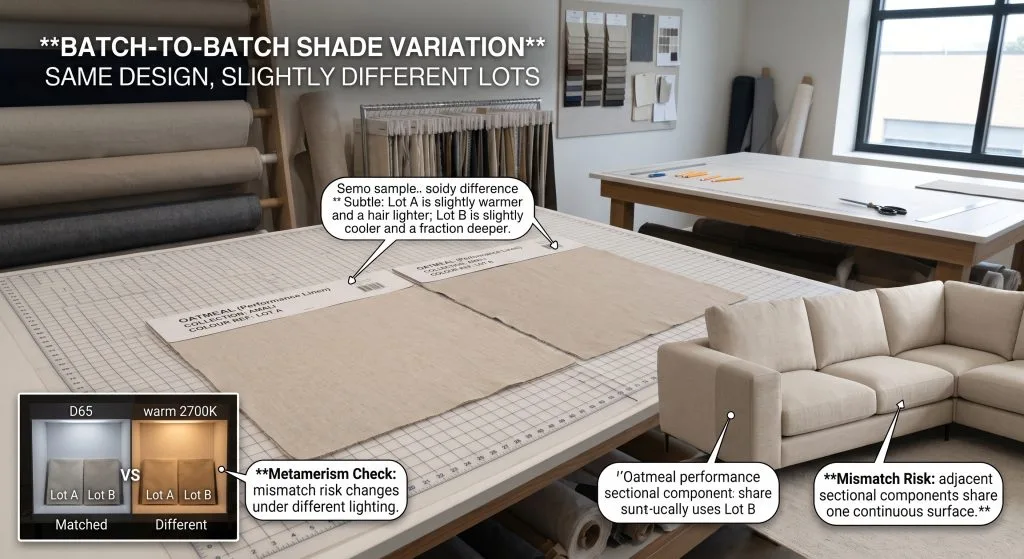
<p>Two rolls of fabric can carry the same design name and colour reference yet appear slightly different when placed side by side. The difference may be subtle—a shade that looks a little warmer, cooler, lighter or deeper—but it becomes important when both batches are used in one room or on the same piece of furniture.</p>
<!-- /wp:paragraph -->

<!-- wp:paragraph -->
<p>This is known as <strong>batch-to-batch shade variation</strong>. It can occur because fabric colour is produced through a combination of fibres, dyes, water, heat, time, pressure and finishing processes. Repeating every variable with absolute identity across separate production runs is difficult, even when a mill uses controlled recipes and colour-quality systems.</p>
<!-- /wp:paragraph -->

<!-- wp:paragraph -->
<p>Slight variation is therefore not automatically a defect. The practical question is whether the difference falls within the agreed tolerance and whether it will remain acceptable in the intended installation. This guide explains why variations occur, how to inspect them correctly and how homeowners, designers and project teams can reduce mismatches.</p>
<!-- /wp:paragraph -->

<!-- wp:heading -->
<h2 class="wp-block-heading">The Quick Answer</h2>
<!-- /wp:heading -->

<!-- wp:list -->
<ul class="wp-block-list">
  <!-- wp:list-item -->
  <li>A <strong>batch</strong> or <strong>dye lot</strong> is a quantity of material processed together under the same production conditions.</li>
  <!-- /wp:list-item -->
  <!-- wp:list-item -->
  <li>Fabric from one dye lot is generally the safest choice when several pieces must match closely.</li>
  <!-- /wp:list-item -->
  <!-- wp:list-item -->
  <li>Separate production runs may show slight differences because fibres, dye uptake, process conditions and finishing can vary.</li>
  <!-- /wp:list-item -->
  <!-- wp:list-item -->
  <li>Texture, pile direction and lighting can create an apparent colour difference even when the dye is not the only cause.</li>
  <!-- /wp:list-item -->
  <!-- wp:list-item -->
  <li>Batch variation is different from fading and colourfastness failure.</li>
  <!-- /wp:list-item -->
  <!-- wp:list-item -->
  <li>For one room or project phase, order enough material at the same time and ask the supplier to confirm batch consistency.</li>
  <!-- /wp:list-item -->
</ul>
<!-- /wp:list -->

<!-- wp:heading -->
<h2 class="wp-block-heading">What Is a Fabric Batch or Dye Lot?</h2>
<!-- /wp:heading -->

<!-- wp:paragraph -->
<p>A fabric batch is a defined quantity produced or processed together. A dye lot more specifically refers to material coloured during the same dyeing run or under the same controlled production sequence.</p>
<!-- /wp:paragraph -->

<!-- wp:paragraph -->
<p>The terms are often used interchangeably in everyday fabric purchasing, although the exact manufacturing process differs between piece-dyed, yarn-dyed, solution-dyed, printed and coated textiles. A batch reference allows the supplier and project team to trace which rolls belong to the same production group.</p>
<!-- /wp:paragraph -->

<!-- wp:paragraph -->
<p>Material from the same batch is expected to be more consistent than material made in separate runs, but it should still be inspected. Variation can sometimes occur within a roll, across its width or from the beginning to the end of a production length.</p>
<!-- /wp:paragraph -->

<!-- wp:heading -->
<h2 class="wp-block-heading">Why Can the Same Fabric Colour Vary Between Batches?</h2>
<!-- /wp:heading -->

<!-- wp:heading {"level":3} -->
<h3 class="wp-block-heading">1. Fibre and Yarn Are Not Always Identical</h3>
<!-- /wp:heading -->

<!-- wp:paragraph -->
<p>Textile colour starts with the substrate—the fibre, yarn or base fabric being coloured. Small differences in fibre origin, polymer characteristics, yarn construction, moisture content, pre-treatment or natural impurities can affect how evenly and deeply dye is absorbed.</p>
<!-- /wp:paragraph -->

<!-- wp:paragraph -->
<p>Natural fibres usually contain more inherent variation than highly controlled synthetic fibres, but synthetic fabrics are not automatically immune. Blended textiles add another variable because each fibre component may interact with colourants and processing conditions differently.</p>
<!-- /wp:paragraph -->

<!-- wp:heading {"level":3} -->
<h3 class="wp-block-heading">2. Dyeing Is Sensitive to Process Conditions</h3>
<!-- /wp:heading -->

<!-- wp:paragraph -->
<p>A dye recipe is more than a colourant formula. The result can also be influenced by water quality, bath ratio, pH, temperature, heating rate, circulation, dye concentration, auxiliary chemicals, processing time and machine loading.</p>
<!-- /wp:paragraph -->

<!-- wp:paragraph -->
<p>Professional dye houses monitor these variables and may use laboratory recipes, automated dosing and instrumental colour measurement. Even so, small process differences can shift the finished shade. The objective of quality control is to keep the result within the approved tolerance—not to assume that independent runs will be visually identical under every condition.</p>
<!-- /wp:paragraph -->

<!-- wp:heading {"level":3} -->
<h3 class="wp-block-heading">3. Finishing Can Change the Final Appearance</h3>
<!-- /wp:heading -->

<!-- wp:paragraph -->
<p>Fabric may be washed, heat-set, calendared, brushed, coated, laminated, softened or treated after colour is applied. Heat, pressure, moisture and finishing chemicals can alter surface reflection, texture or apparent colour.</p>
<!-- /wp:paragraph -->

<!-- wp:paragraph -->
<p>This is why colour should be approved on the finished production fabric whenever possible. A shade that matches at an earlier stage may appear different after coating, brushing or another final treatment.</p>
<!-- /wp:paragraph -->

<!-- wp:heading {"level":3} -->
<h3 class="wp-block-heading">4. Texture and Pile Change How Light Reflects</h3>
<!-- /wp:heading -->

<!-- wp:paragraph -->
<p>Velvet, chenille, brushed fabrics and other directional surfaces can look lighter or darker depending on the direction of the pile and the viewer’s position. The effect may resemble a shade mismatch even when pieces came from the same batch.</p>
<!-- /wp:paragraph -->

<!-- wp:paragraph -->
<p>Woven texture, lustrous yarns and satin constructions also reflect light differently across folds, curves and upholstered shapes. Before rejecting the colour, align every sample in the same warp and pile direction and compare equivalent areas.</p>
<!-- /wp:paragraph -->

<!-- wp:heading {"level":3} -->
<h3 class="wp-block-heading">5. Printed and Coated Fabrics Have Additional Variables</h3>
<!-- /wp:heading -->

<!-- wp:paragraph -->
<p>Printed textiles depend on colour preparation, print method, registration, curing and the base cloth. Coated fabrics depend on coating composition, application weight, curing and surface uniformity. Each step may influence the final visual result.</p>
<!-- /wp:paragraph -->

<!-- wp:paragraph -->
<p>A difference may therefore come from the ground fabric, the applied colour, the finish or a combination of all three.</p>
<!-- /wp:paragraph -->

<!-- wp:heading -->
<h2 class="wp-block-heading">Lighting Can Make a Match Look Different</h2>
<!-- /wp:heading -->

<!-- wp:paragraph -->
<p>Colour is not seen in isolation. It is the result of the light source, the material and the observer. A fabric pair that appears to match under showroom lighting may separate under daylight, warm bedroom lamps or cool commercial LEDs.</p>
<!-- /wp:paragraph -->

<!-- wp:heading {"level":3} -->
<h3 class="wp-block-heading">What Is Metamerism?</h3>
<!-- /wp:heading -->

<!-- wp:paragraph -->
<p><strong>Metamerism</strong> occurs when two samples appear to match under one light source but not under another. This can happen when the samples produce a similar visible colour under one condition even though their spectral response is different.</p>
<!-- /wp:paragraph -->

<!-- wp:paragraph -->
<p>It is especially relevant when fabrics, trims, threads, linings, painted walls and upholstered surfaces are being coordinated. Two materials may never behave identically because they use different fibres, dyes, textures or finishes.</p>
<!-- /wp:paragraph -->

<!-- wp:paragraph -->
<p>For UAE interiors, evaluate important colours in the actual room during daylight and again under the artificial lighting used at night. Strong sunlight through glazing, warm decorative lamps and cool-white LEDs can reveal different aspects of the same material.</p>
<!-- /wp:paragraph -->

<!-- wp:heading -->
<h2 class="wp-block-heading">Shade Variation, Fading and Colourfastness Are Different</h2>
<!-- /wp:heading -->

<!-- wp:table -->
<figure class="wp-block-table"><table>
  <caption>Difference between batch shade variation, fading and colourfastness</caption>
  <thead>
    <tr>
      <th scope="col">Issue</th>
      <th scope="col">When it appears</th>
      <th scope="col">What it usually means</th>
    </tr>
  </thead>
  <tbody>
    <tr>
      <th scope="row">Batch shade variation</th>
      <td>When material from separate production lots is compared</td>
      <td>The initial shades are not exactly the same</td>
    </tr>
    <tr>
      <th scope="row">Fading</th>
      <td>After exposure to light, cleaning, heat, atmosphere or use</td>
      <td>The original colour has changed over time</td>
    </tr>
    <tr>
      <th scope="row">Colourfastness</th>
      <td>When performance is assessed against a defined exposure or test</td>
      <td>The degree to which colour resists change or transfer under that condition</td>
    </tr>
    <tr>
      <th scope="row">Directional shading</th>
      <td>When pile or surface direction changes</td>
      <td>Light is reflecting differently from the fabric surface</td>
    </tr>
    <tr>
      <th scope="row">Metamerism</th>
      <td>When the light source changes</td>
      <td>Two samples match under one illuminant but separate under another</td>
    </tr>
  </tbody>
</table></figure>
<!-- /wp:table -->

<!-- wp:paragraph -->
<p>A fabric can have good colourfastness and still show a slight initial difference from another dye lot. Conversely, two pieces may match when new but age differently because they receive unequal sunlight or cleaning. Diagnosing the correct issue prevents the wrong remedy.</p>
<!-- /wp:paragraph -->

<!-- wp:heading -->
<h2 class="wp-block-heading">When Is Shade Variation Acceptable?</h2>
<!-- /wp:heading -->

<!-- wp:paragraph -->
<p>There is no responsible universal answer such as “all differences below one number are acceptable.” Tolerance depends on the material, colour, texture, viewing conditions, end use, brand standard and project agreement.</p>
<!-- /wp:paragraph -->

<!-- wp:paragraph -->
<p>A slight difference may be acceptable when the pieces will be installed in separate rooms, broken up by architecture or viewed under different lighting. The same difference may be unacceptable when two curtain panels meet at the centre, adjacent sofa sections share one continuous surface or replacement fabric sits beside the original.</p>
<!-- /wp:paragraph -->

<!-- wp:table -->
<figure class="wp-block-table"><table>
  <caption>Practical assessment of fabric shade variation by application</caption>
  <thead>
    <tr>
      <th scope="col">Application</th>
      <th scope="col">Mismatch risk</th>
      <th scope="col">Recommended control</th>
    </tr>
  </thead>
  <tbody>
    <tr>
      <th scope="row">Two curtains meeting at one window</th>
      <td>High</td>
      <td>Cut both panels from the same confirmed batch and orient them consistently</td>
    </tr>
    <tr>
      <th scope="row">Sectional sofa or paired chairs</th>
      <td>High</td>
      <td>Reserve one batch for all adjacent upholstered components</td>
    </tr>
    <tr>
      <th scope="row">Separate rooms</th>
      <td>Moderate to low</td>
      <td>Review whether the pieces are ever seen together or under shared lighting</td>
    </tr>
    <tr>
      <th scope="row">Later repair or replacement</th>
      <td>High</td>
      <td>Keep spare material from the original batch where practical</td>
    </tr>
    <tr>
      <th scope="row">Textured or natural-look fabric</th>
      <td>Application-dependent</td>
      <td>Approve the intended visual character and natural variation before ordering</td>
    </tr>
  </tbody>
</table></figure>
<!-- /wp:table -->

<!-- wp:paragraph -->
<p>If a contract requires instrumental colour tolerances, viewing conditions or a named test method, these must be documented before production. A general retail colour name is not a substitute for an approved physical standard and an agreed acceptance process.</p>
<!-- /wp:paragraph -->

<!-- wp:heading -->
<h2 class="wp-block-heading">How to Compare Two Fabric Shades Correctly</h2>
<!-- /wp:heading -->

<!-- wp:list {"ordered":true} -->
<ol class="wp-block-list">
  <!-- wp:list-item -->
  <li><strong>Confirm the references.</strong> Check the collection, design, colour, batch and roll numbers before comparing.</li>
  <!-- /wp:list-item -->
  <!-- wp:list-item -->
  <li><strong>Use representative pieces.</strong> Compare clean, uncreased samples large enough to show the texture and colour properly.</li>
  <!-- /wp:list-item -->
  <!-- wp:list-item -->
  <li><strong>Align direction.</strong> Place the warp, pattern and pile in the same orientation.</li>
  <!-- /wp:list-item -->
  <!-- wp:list-item -->
  <li><strong>Use the same backing.</strong> Transparent or open fabrics may look different over contrasting backgrounds.</li>
  <!-- /wp:list-item -->
  <!-- wp:list-item -->
  <li><strong>Check more than one light source.</strong> Review controlled daylight where possible and the artificial light used in the final room.</li>
  <!-- /wp:list-item -->
  <!-- wp:list-item -->
  <li><strong>Change the viewing angle.</strong> This helps reveal pile, lustre and directional shading.</li>
  <!-- /wp:list-item -->
  <!-- wp:list-item -->
  <li><strong>Compare against the approved standard.</strong> Do not rely only on memory, a phone screen or two unverified cuttings.</li>
  <!-- /wp:list-item -->
  <!-- wp:list-item -->
  <li><strong>Record the decision.</strong> For project work, retain labelled approved samples and the conditions under which they were accepted.</li>
  <!-- /wp:list-item -->
</ol>
<!-- /wp:list -->

<!-- wp:paragraph -->
<p>Photography can document a concern, but phone cameras, automatic exposure, white balance and screen settings may exaggerate or hide a shade difference. Physical comparison remains important.</p>
<!-- /wp:paragraph -->

<!-- wp:heading -->
<h2 class="wp-block-heading">How to Reduce Shade Mismatch Before Ordering</h2>
<!-- /wp:heading -->

<!-- wp:heading {"level":3} -->
<h3 class="wp-block-heading">Order the Full Quantity Together</h3>
<!-- /wp:heading -->

<!-- wp:paragraph -->
<p>Calculate the complete requirement before placing the order. Include pattern matching, seams, repeat, cutting waste, future repairs and a reasonable contingency appropriate to the project. Ordering an additional roll later may mean receiving a different batch.</p>
<!-- /wp:paragraph -->

<!-- wp:heading {"level":3} -->
<h3 class="wp-block-heading">Ask for Batch Confirmation</h3>
<!-- /wp:heading -->

<!-- wp:paragraph -->
<p>For curtains that meet at the centre, paired furniture or multiple pieces in one visible zone, ask whether the complete allocation can be supplied from one batch. Record the batch and roll numbers on delivery rather than discarding the labels immediately.</p>
<!-- /wp:paragraph -->

<!-- wp:heading {"level":3} -->
<h3 class="wp-block-heading">Approve the Current Production Material</h3>
<!-- /wp:heading -->

<!-- wp:paragraph -->
<p>A showroom hanger or old memo sample may not represent current stock exactly. For colour-critical work, request a cutting from the available production batch and approve it in the intended environment before cutting or fabrication begins.</p>
<!-- /wp:paragraph -->

<!-- wp:heading {"level":3} -->
<h3 class="wp-block-heading">Keep Adjacent Pieces Together</h3>
<!-- /wp:heading -->

<!-- wp:paragraph -->
<p>Plan cutting so adjacent curtain panels, cushions or upholstered sections come from the same roll or closely checked rolls. Maintain a consistent fabric direction throughout the installation.</p>
<!-- /wp:paragraph -->

<!-- wp:heading {"level":3} -->
<h3 class="wp-block-heading">Retain a Labelled Reserve</h3>
<!-- /wp:heading -->

<!-- wp:paragraph -->
<p>Where future repair is foreseeable, store a labelled remnant from the original batch. It may still age differently from installed material, but it usually offers a better starting point than ordering an unknown batch years later.</p>
<!-- /wp:paragraph -->

<!-- wp:heading -->
<h2 class="wp-block-heading">What Should You Do If You Need More Fabric Later?</h2>
<!-- /wp:heading -->

<!-- wp:paragraph -->
<p>First, provide the supplier with the original design, colour, batch, roll and order references. Ask whether stock from the same batch remains available. Do not rely on the colour name alone.</p>
<!-- /wp:paragraph -->

<!-- wp:paragraph -->
<p>If only a new batch is available, request a current cutting and compare it with the installed textile under the room’s normal lighting. Remember that the installed fabric may also have changed through sunlight, cleaning and use, so even an original-batch remnant may not look identical to a surface that has been exposed for years.</p>
<!-- /wp:paragraph -->

<!-- wp:paragraph -->
<p>When the difference is visible, a complete visual zone may need to be replaced rather than inserting one unmatched panel or sofa section. In other cases, moving the new material to a separate room or less adjacent area can make the difference unnoticeable.</p>
<!-- /wp:paragraph -->

<!-- wp:heading -->
<h2 class="wp-block-heading">Curtains, Upholstery and Cushions Need Different Planning</h2>
<!-- /wp:heading -->

<!-- wp:heading {"level":3} -->
<h3 class="wp-block-heading">Curtains</h3>
<!-- /wp:heading -->

<!-- wp:paragraph -->
<p>Centre-opening curtain panels are seen side by side across a large vertical surface, so differences can be easy to notice. Use the same batch, keep the fabric direction consistent and inspect the panels both open and closed. Sheer fabrics should also be compared over the same background because transparency changes the apparent shade.</p>
<!-- /wp:paragraph -->

<!-- wp:heading {"level":3} -->
<h3 class="wp-block-heading">Upholstery</h3>
<!-- /wp:heading -->

<!-- wp:paragraph -->
<p>On a sectional sofa, adjacent components create direct comparison points. Curved surfaces and pile fabrics can produce natural light-and-dark effects, so direction must be planned before cutting. A replacement seat or arm made later may be more noticeable than a slight difference on a separate chair.</p>
<!-- /wp:paragraph -->

<!-- wp:heading {"level":3} -->
<h3 class="wp-block-heading">Cushions and Accessories</h3>
<!-- /wp:heading -->

<!-- wp:paragraph -->
<p>Small accessories may tolerate more visual variation when contrast is part of the design. If cushions are intended to match a sofa exactly, cut them from the same approved material allocation rather than treating them as a later purchase.</p>
<!-- /wp:paragraph -->

<!-- wp:paragraph -->
<p>Browse the <a href="/fabric/">AMALI fabric catalogue</a> to compare furnishing options by application, construction and available specification.</p>
<!-- /wp:paragraph -->

<!-- wp:heading -->
<h2 class="wp-block-heading">A Better Approval Process for Designers and Projects</h2>
<!-- /wp:heading -->

<!-- wp:list {"ordered":true} -->
<ol class="wp-block-list">
  <!-- wp:list-item -->
  <li>Define the design, colour, construction, end use and required quantity.</li>
  <!-- /wp:list-item -->
  <!-- wp:list-item -->
  <li>Agree whether approval is against a physical standard, laboratory sample, strike-off or current production cutting.</li>
  <!-- /wp:list-item -->
  <!-- wp:list-item -->
  <li>Document the permitted visual or instrumental tolerance and the required viewing conditions.</li>
  <!-- /wp:list-item -->
  <!-- wp:list-item -->
  <li>Confirm that post-dyeing finishes are included in the approved sample.</li>
  <!-- /wp:list-item -->
  <!-- wp:list-item -->
  <li>Approve sufficient material before cutting, stitching or upholstery begins.</li>
  <!-- /wp:list-item -->
  <!-- wp:list-item -->
  <li>Allocate matching rolls to adjacent rooms, panels or furniture pieces.</li>
  <!-- /wp:list-item -->
  <!-- wp:list-item -->
  <li>Retain labelled control samples, roll records and signed approvals.</li>
  <!-- /wp:list-item -->
  <!-- wp:list-item -->
  <li>Escalate any visible inconsistency before fabrication, not after installation.</li>
  <!-- /wp:list-item -->
</ol>
<!-- /wp:list -->

<!-- wp:paragraph -->
<p>Instrumental measurement can strengthen this process by expressing colour difference objectively, while standardised visual assessment confirms how the textile is perceived. Neither should be used without agreed settings, sample preparation and acceptance criteria.</p>
<!-- /wp:paragraph -->

<!-- wp:heading -->
<h2 class="wp-block-heading">Common Mistakes to Avoid</h2>
<!-- /wp:heading -->

<!-- wp:list -->
<ul class="wp-block-list">
  <!-- wp:list-item -->
  <li>Ordering part of one room now and the balance from an unknown batch later.</li>
  <!-- /wp:list-item -->
  <!-- wp:list-item -->
  <li>Approving colour only from a website image or phone photograph.</li>
  <!-- /wp:list-item -->
  <!-- wp:list-item -->
  <li>Comparing velvet or chenille samples in opposite pile directions.</li>
  <!-- /wp:list-item -->
  <!-- wp:list-item -->
  <li>Checking colour under only one light source.</li>
  <!-- /wp:list-item -->
  <!-- wp:list-item -->
  <li>Assuming the showroom sample must exactly represent every future production run.</li>
  <!-- /wp:list-item -->
  <!-- wp:list-item -->
  <li>Confusing an initial dye-lot difference with fading after installation.</li>
  <!-- /wp:list-item -->
  <!-- wp:list-item -->
  <li>Discarding batch and roll labels before the project is complete.</li>
  <!-- /wp:list-item -->
  <!-- wp:list-item -->
  <li>Cutting all material before the current batch is approved.</li>
  <!-- /wp:list-item -->
  <!-- wp:list-item -->
  <li>Applying one arbitrary tolerance to every fibre, texture, colour and end use.</li>
  <!-- /wp:list-item -->
</ul>
<!-- /wp:list -->

<!-- wp:heading -->
<h2 class="wp-block-heading">Fabric Shade-Matching Checklist</h2>
<!-- /wp:heading -->

<!-- wp:list -->
<ul class="wp-block-list">
  <!-- wp:list-item -->
  <li>Confirm design and colour reference.</li>
  <!-- /wp:list-item -->
  <!-- wp:list-item -->
  <li>Record batch and roll numbers.</li>
  <!-- /wp:list-item -->
  <!-- wp:list-item -->
  <li>Order the complete quantity with suitable contingency.</li>
  <!-- /wp:list-item -->
  <!-- wp:list-item -->
  <li>Request one batch for adjacent pieces where possible.</li>
  <!-- /wp:list-item -->
  <!-- wp:list-item -->
  <li>Approve a current, representative production cutting.</li>
  <!-- /wp:list-item -->
  <!-- wp:list-item -->
  <li>Align warp, pattern and pile direction before comparison.</li>
  <!-- /wp:list-item -->
  <!-- wp:list-item -->
  <li>Evaluate under daylight and the final room lighting.</li>
  <!-- /wp:list-item -->
  <!-- wp:list-item -->
  <li>Use the same background for sheer or open fabrics.</li>
  <!-- /wp:list-item -->
  <!-- wp:list-item -->
  <li>Confirm tolerances before production on colour-critical projects.</li>
  <!-- /wp:list-item -->
  <!-- wp:list-item -->
  <li>Inspect before cutting and fabrication.</li>
  <!-- /wp:list-item -->
  <!-- wp:list-item -->
  <li>Retain labelled spare material and approval samples.</li>
  <!-- /wp:list-item -->
</ul>
<!-- /wp:list -->

<!-- wp:paragraph -->
<p>Climate and strong sunlight can also influence how textiles are selected and how installed colours age. AMALI’s <a href="/journal/best-fabrics-uae-climate/">UAE climate fabric guide</a> provides additional room-by-room context.</p>
<!-- /wp:paragraph -->

<!-- wp:heading -->
<h2 class="wp-block-heading">Frequently Asked Questions</h2>
<!-- /wp:heading -->

<!-- wp:heading {"level":3} -->
<h3 class="wp-block-heading">Is slight shade variation between fabric batches normal?</h3>
<!-- /wp:heading -->

<!-- wp:paragraph -->
<p>It can be normal because separate production runs may differ slightly in substrate, dye uptake, process conditions and finishing. Whether the result is acceptable depends on the agreed tolerance, end use and visibility of the difference.</p>
<!-- /wp:paragraph -->

<!-- wp:heading {"level":3} -->
<h3 class="wp-block-heading">Does shade variation mean the fabric is defective?</h3>
<!-- /wp:heading -->

<!-- wp:paragraph -->
<p>Not automatically. A small difference within the specified tolerance may be acceptable. A pronounced mismatch, an out-of-tolerance result or inconsistent shading within the same approved allocation should be investigated before fabrication.</p>
<!-- /wp:paragraph -->

<!-- wp:heading {"level":3} -->
<h3 class="wp-block-heading">Can a supplier guarantee the exact same shade in a later order?</h3>
<!-- /wp:heading -->

<!-- wp:paragraph -->
<p>The same colour reference can usually be reproduced within a controlled tolerance, but an exact visual match to an earlier independent batch should not be assumed. Request a current sample and compare it with the original or installed material.</p>
<!-- /wp:paragraph -->

<!-- wp:heading {"level":3} -->
<h3 class="wp-block-heading">Why does the fabric match in the showroom but not at home?</h3>
<!-- /wp:heading -->

<!-- wp:paragraph -->
<p>The light source, surrounding colours, glazing and viewing angle have changed. Metamerism can also cause two materials to match under one illuminant but not another. Always approve colour in the intended room where possible.</p>
<!-- /wp:paragraph -->

<!-- wp:heading {"level":3} -->
<h3 class="wp-block-heading">Why does velvet look like two different shades?</h3>
<!-- /wp:heading -->

<!-- wp:paragraph -->
<p>Velvet has a directional pile. When pieces face opposite directions, they reflect light differently and can appear lighter or darker. Align the pile before deciding whether there is a true colour mismatch.</p>
<!-- /wp:paragraph -->

<!-- wp:heading {"level":3} -->
<h3 class="wp-block-heading">Is a batch difference the same as poor colourfastness?</h3>
<!-- /wp:heading -->

<!-- wp:paragraph -->
<p>No. Batch difference describes the initial colour relationship between production lots. Colourfastness describes resistance to colour change or transfer under a defined exposure such as light, washing or rubbing.</p>
<!-- /wp:paragraph -->

<!-- wp:heading {"level":3} -->
<h3 class="wp-block-heading">Should all curtains in one room come from the same dye lot?</h3>
<!-- /wp:heading -->

<!-- wp:paragraph -->
<p>Yes, where practical—especially panels that meet at the same window or sit side by side. The supplier should also check direction and consistency across the allocated rolls.</p>
<!-- /wp:paragraph -->

<!-- wp:heading {"level":3} -->
<h3 class="wp-block-heading">How much spare fabric should a project keep?</h3>
<!-- /wp:heading -->

<!-- wp:paragraph -->
<p>There is no universal percentage. The suitable reserve depends on repeat, fabrication method, number of rooms, expected maintenance, risk of damage and future availability. The designer, fabricator and supplier should agree the contingency before ordering.</p>
<!-- /wp:paragraph -->

<!-- wp:heading -->
<h2 class="wp-block-heading">The Final Answer</h2>
<!-- /wp:heading -->

<!-- wp:paragraph -->
<p>Slight shade variation can occur because textiles are made through multiple material and process stages, and colour is affected by both the fabric surface and the light in which it is viewed. Controlled production and colour measurement reduce variation, but separate batches should not be assumed to be perfectly identical.</p>
<!-- /wp:paragraph -->

<!-- wp:paragraph -->
<p>The safest approach is practical: order the full requirement together, confirm batches, approve current production material, keep adjacent pieces in the same allocation, inspect under relevant lighting and retain clear records. These steps protect both the visual result and the project team when additional material is needed later.</p>
<!-- /wp:paragraph -->